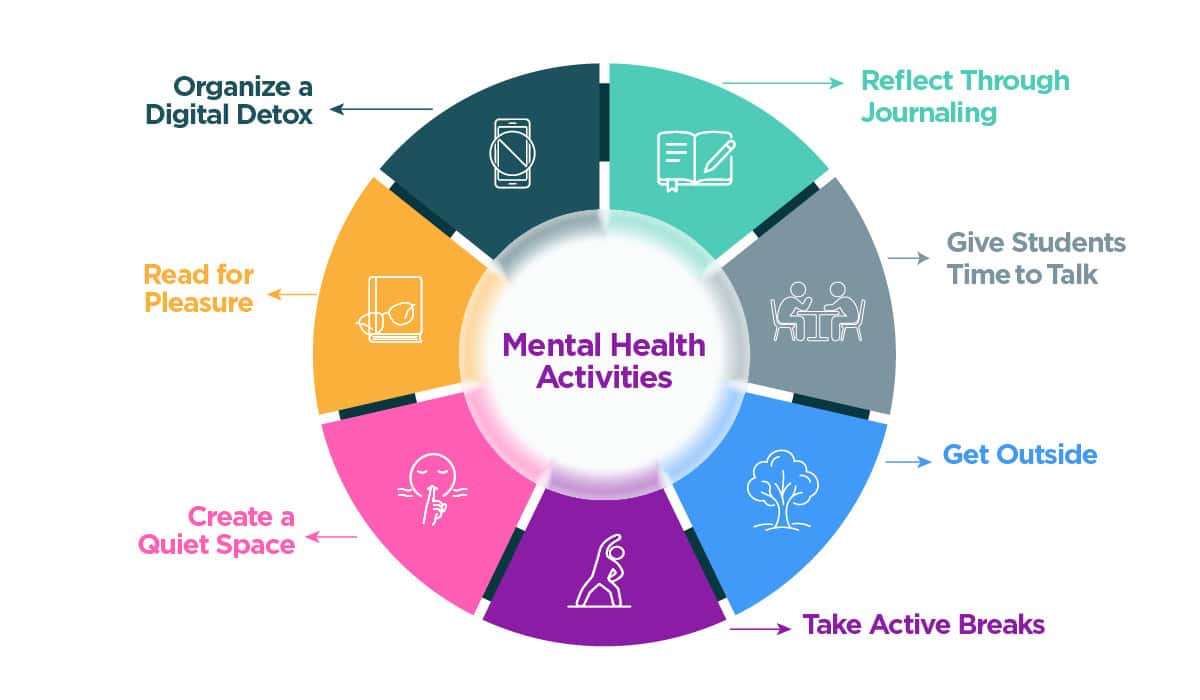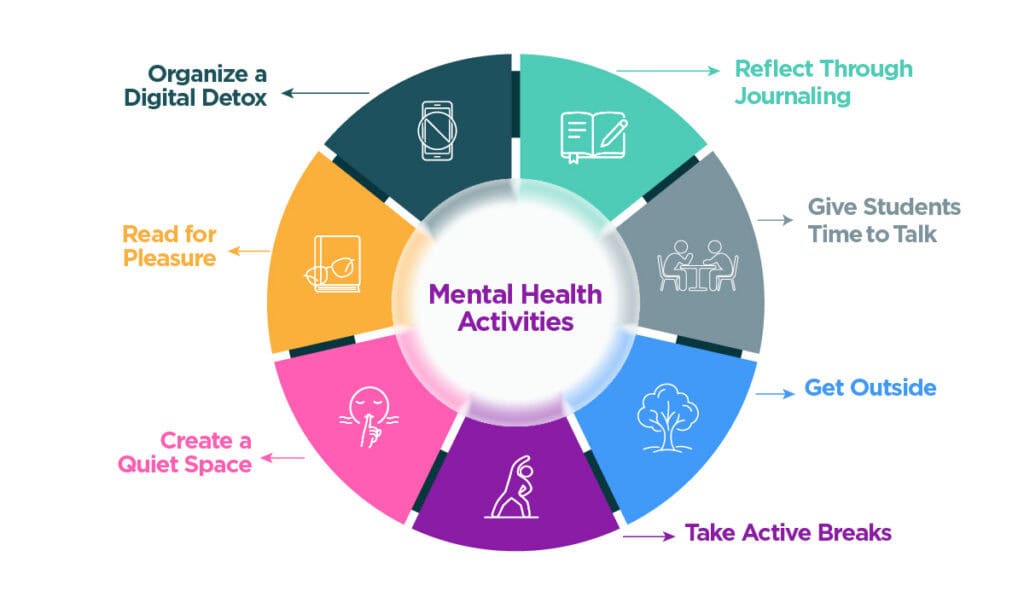
Educators need more resources to help students in the classroom who are struggling with anxiety and stress and don’t have good coping, relationship and academic management skills, according to We Are Teachers. Here are seven mental health activities for teens – and many work for younger kids too.
1) Reflect through journaling
Journaling can reduce anxiety, increase awareness and emotional regulation, reduce brooding, and help physical healing. Designate a few minutes of class time every day to writing down thoughts and feelings so kids can get a better handle on their thoughts, behaviors, and emotions.
2) Give students time to talk
Classroom talk helps students learn, reflect on what they are learning, and communicate their knowledge and understanding. Active listening is important for effective participation in a conversation, helping the speaker become understood. Set ground rules so discussions are fair and respectful. Create a routine to allow time for students to talk on a regular basis.
3) Get outside
Being outdoors decreases anxiety, improves focus, boosts immunity, and helps with sleep, among other benefits. Think about which lessons you could take outside with little prep. Read-alouds or independent reading work well outdoors. Practice getting outside, staying within a defined area, spreading out, and gathering back together. Making outdoor learning part of your school culture can help weather changes in staffing, programming and facilities.
4) Take active breaks
Movement breaks for students help create a level of alertness that enables a child to focus and concentrate. Incorporate short bursts of exercise into your agenda.
5) Create a quiet space
Schools in Hennepin County, Minnesota, use calm spaces to deescalate emotions or anxiety before one gets too overwhelmed. A calm room within the school allows access to a variety of tools and techniques to combat anxiety or daily stress. You can fill the space with various mental health activities for teens, such as fidgets and poetry books.
6) Read for pleasure
A study of more than 10,000 young adolescents found that those who begin reading for pleasure early in life tend to perform better at cognitive tests, have better mental health, and are generally better adjusted. Encourage kids to pick something they’re excited to read and give them time to dive in.
7) Organize a digital detox
A digital detox for teens improves social skills, enhances the ability to read emotional cues in others, fosters better interpersonal relationships, and improves a sense of well-being. Reducing screen time also encourages physical activity – essential for mental and cardiovascular health.
We Are Teachers