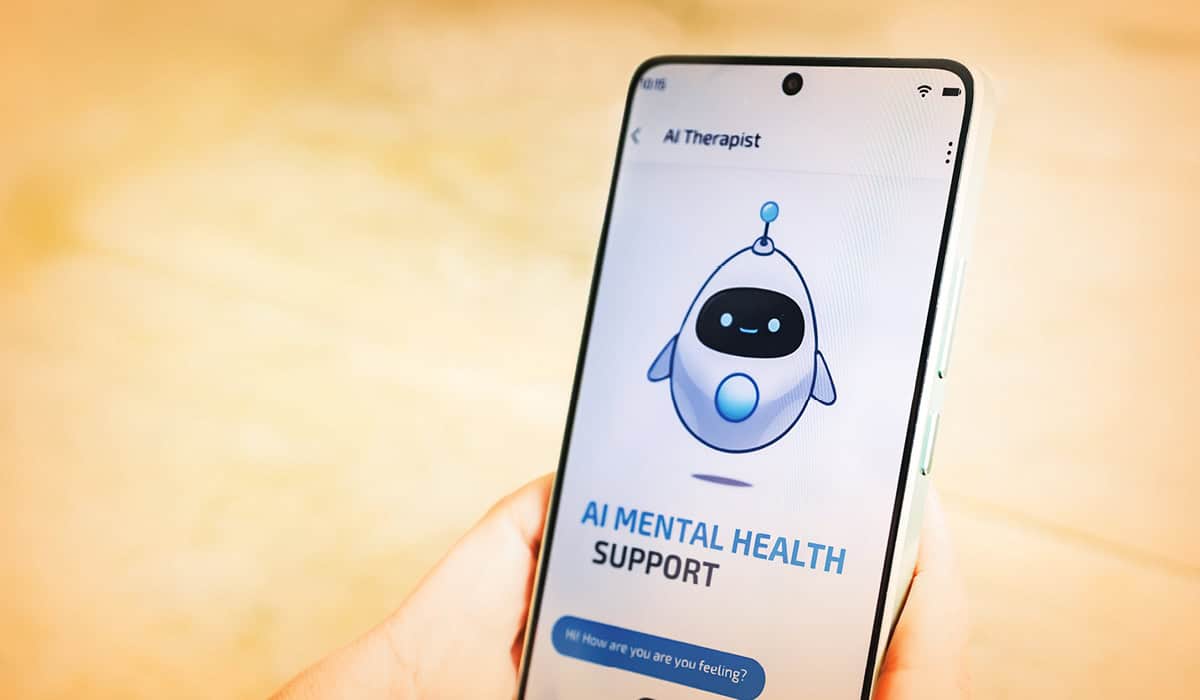
AI chatbots are becoming the first choice for emotional aid for growing numbers of teens, according to research published by Brown University and reported by EdSource.
About 1 in 8 adolescents have used AI chatbots for mental health support, according to the research. Many are turning to the technology because they see it as more accessible and designed to validate emotions.
Since the study’s November 2025 publication, researchers have observed a 50% increase in adolescents using AI chatbots for emotional support in less than a year. Most teens use it secretively, without telling anyone, says Brown researcher Ateev Mehrotra.
Many aren’t talking to AI chatbots because they believe it’s better than talking to a person – they feel they have no other alternative, interviews with high school students suggest. Schools are facing a widespread shortage of counseling and mental health staff, and visiting a psychologist or psychiatrist can be too expensive for families.
There are other factors:
- Some teens say they don’t have a trusted adult to divulge intimate feelings;
- Others don’t want to feel judged.
Chatbots are programmed to listen and programmed to … provide empathy, said one teen. “Like ‘I’m sorry that happened. What about this? What about that?’ ”
This teen, interviewed by EdSource, saw numerous therapists. Some helped, others didn’t. Positive visits were often limited to a 50-minute session every few weeks.
AI, by contrast, was always available. And, being constantly trained by its users, many of whom are younger, the teen felt the bots were more in tune with her realities.
But she became lonelier the more she interacted with them.
“I would go back to the AI whenever things got harder,” she said. “And then, a couple months later, I’d be like, ‘OK, I don’t want to do this anymore.’ And then, it’d be a few months, and then I’d go back, and it’s just this endless loop.”
Like a “toxic relationship,” it has “something that you want or that you need (and) it makes you feel like you can’t get it anywhere else,” she said.
That “something” was the need was validation, without fear of judgment.
“That’s what the chatbot is programmed to give you,” she said. “It’s programmed to provide interaction. And the user is always right. … I will admit, I like feeling right.”
This level of dependence worries parents and mental health advocates. Many point to instances where AI has reportedly assisted in suicides. And while licensed psychologists or credentialed educators are required to alert authorities if someone is about to harm themselves or others – chatbot are not.
“We’re in the wild wild west, where the arguments are being made that technology is going to do what it does, and no one’s responsible for any consequences that may come to bear,” said Keri Rodrigues, president of the National Parents Union.
Some students lacking resources or fighting the mental health stigma feel that a bot is better than nothing.
That lack of support can go beyond family and friends for many students. California schools face a longstanding shortage of school counselors, social workers and mental health support staff. The state averages about 1 school counselor for every 432 students, nearly double the 1:250 ratio recommended by the American School Counselors Association.
Given the realities, some researchers believe AI could help fill gaps in care.
“The majority of people who have a mental health condition are unable to access care, and if (AI) is available to everybody, one could see that as being really valuable,” said Mehrotra, the Brown University researcher.
But AI is no substitute for human care, said Rodrigues, the National Parents Union president. “This technology has the ability to probably do some incredible things for humanity,” she said. “It also has the very real prospect of hurting kids.” Some may not be able to afford costly apps that can serve as safeguards and alert parents of red flags.
The lines between “person and computer blur” as generative AI such as ChatGPT advances, said the teen who has used both therapist and chatbots. She felt the technology, capable of presenting its own opinions and perspectives, has gone too far.
Now 18, she is seeing a therapist who can fit her in once a week — and is able to change her relationship with the bots.
She no longer views AI chatbots as trusted friends and tries to limit her AI use as more of a personal assistant for tasks such as changing a light bulb.
“I want to see what I’m like without a screen,” she said. “I want to do things, and I want to go places, and I want to see what I’m really capable of.”
EdSource