Students need resilience – such as learning from failure or putting traumas in context – and strong teacher-student relationships and open and caring cultures can help develop this life skill, according to two experts from Harvard Graduate School of Education interviewed in a K-12 Dive article.
“It’s about growth and preparation for the next phase,” says Rick Weissbourd, senior lecturer of education and faculty director of the Making Caring Common Project at the Harvard Graduate School of Education. “High on the list is being anchored to adults you care about and respect. Kids who have good relationships with adults tend to withstand hardship. Kids who have purpose tend to withstand hardship.”
Keys to resilience:
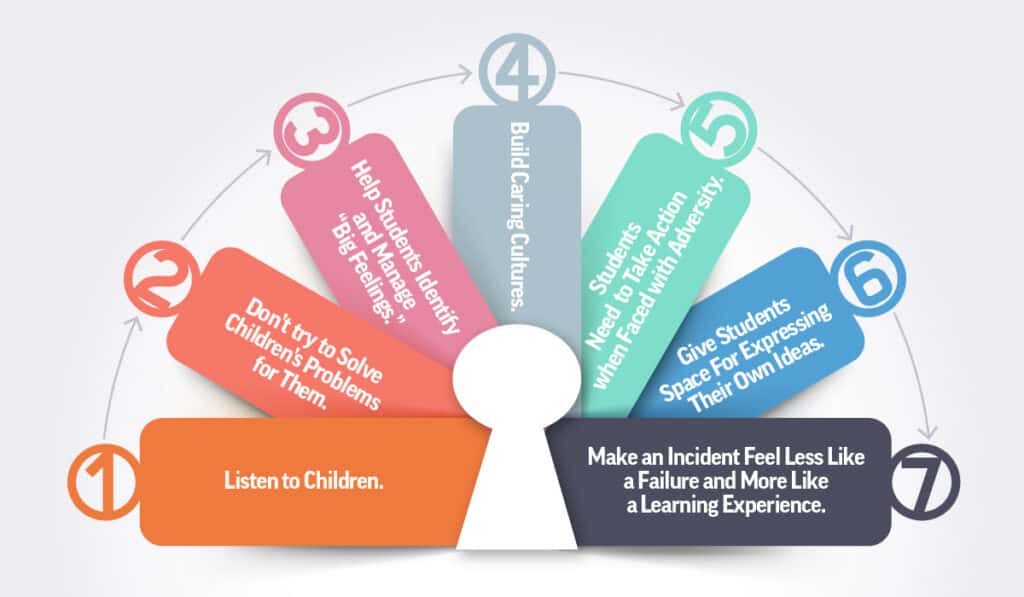
1) Listen to children. Build protective relationships where it’s OK to try something and fail, says Rebecca Rolland, adjunct lecturer at Harvard GSE.
“It’s important to give the message that, ‘You have value, you have expertise.’ … It’s about trying to find ways to let them be the expert and reinforce that sense of self,” she says
2) Don’t try to solve children’s problems for them. This takes away opportunities to build resilience.
“A kid should learn how to fail and how to cope with it,” says Weissbourd. And those who have been through trauma need assistance to “make sense of a trauma in some way, to feel like they have some control over it.”
3) Help students identify and manage “big feelings.” Sometimes they aren’t sure how to express themselves when they feel upset or defeated, Rolland says.
“What are you feeling: Disappointed? Anxious? A combination? It’s helpful in figuring out what they can do as a next step, in teaching coping strategies. What can each of us do when we feel angry or feel disappointed?” she asks. “It’s not your personal failing. It’s a shared human experience.”
4) Build caring cultures. Bottom of Form
“It works around alleviating mental health challenges and increasing a sense of belonging,” he says. “Intentionality around relationships is a really important thing, creating a culture of care where the teacher knows the name and something in particular about every kid in the class,” Weissbourd says. Assign adults to students who name a caring relationship.
5) Students need to take action when faced with adversity. Being passive can corrode and diminish people, Weissbourd says.
“If you’re worried about environmental degradation, get involved in some way in climate change,” he says. “If you’re worried about neighborhood violence, get involved in protecting your community.”
6) Give students space for expressing their own ideas. Allow them to talk about how they want to confront challenges and failures, Rolland says. If they don’t want to talk, “It can start with saying, ‘Let’s draw what you think didn’t work,’ or, ‘You can write me a private note.’”
7) Make an incident feel less like a failure and more like a learning experience. Don’t blame a child, or let a child blame themselves,” Rolland says.
If a student in an 8th grade science class misses a step in an experiment and doesn’t get the expected chemical reaction, the teacher can ask the class what might have gone wrong — and also mention what went right — without necessarily naming the student, she says.
“What can we learn from the result? What was missing here?” she says. “We’re actually incorporating this quote-unquote ‘failure’ into the curriculum in a positive way.”
“It’s flipping the script,” she says. “If you feel bad and go into your feelings, that leads to rumination. Instead, [the message is] ‘This is typical. This happens to all of us.’”
K-12 Dive