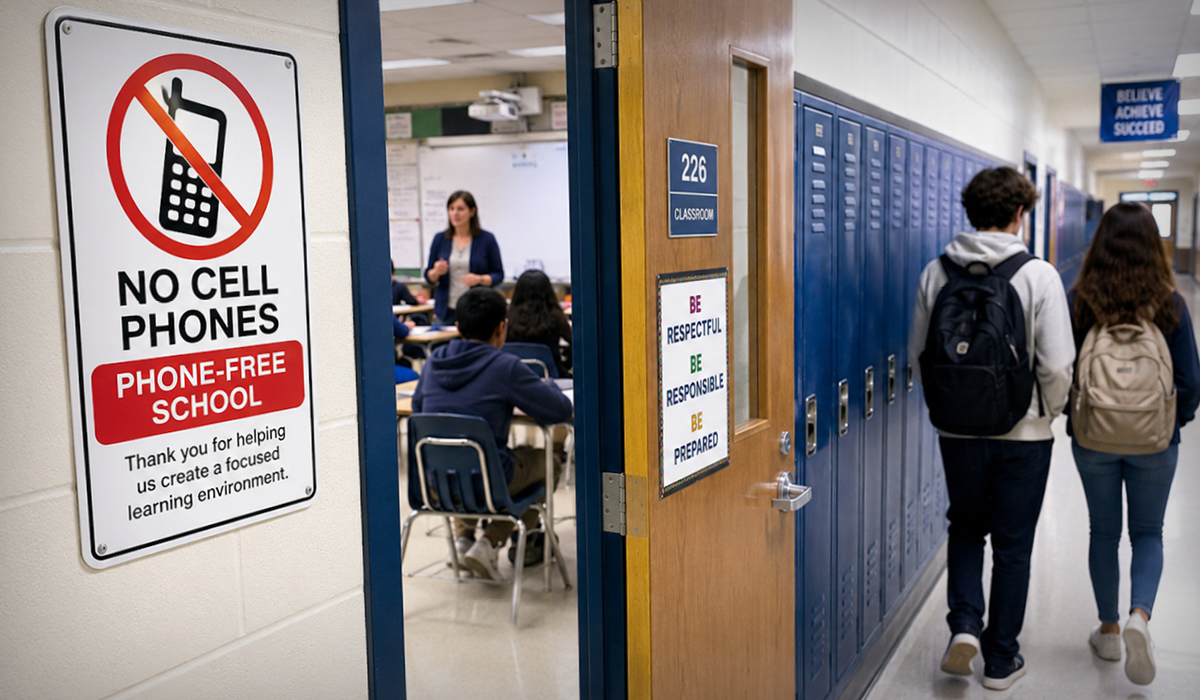
Phone use during the school day by teens increased from 28% at the start of 2025-26 school year to 42% by year end, despite growing cellphone restrictions, according to a survey by the Brookings Institution cited in a K-12 Dive article.
And teachers have become less vigilant, according to the survey. Nearly half of teens ages 13-17 said their teachers became less strict about enforcing cellphone policies over the year.
Students may be working around policies such as pouches and locker requirements, and teachers may be slackening oversight as the school year goes on, the researchers concluded. Bell-to-bell policies may be more effective compared to less strict cellphone policies, researchers said.
Nearly half of states have passed “bell-to-bell” bans that take cellphones out of the hands of students for the entire school day, according to the Harvard Kennedy School. Other states allow school districts to adopt policies, but don’t require day-long bans. Some bans prohibit cellphone use during instruction time.
According to the Brookings survey, 56% of teens attended a school with a bell-to-bell ban; the remaining 44% attended schools with less strict policies.
Brookings found that bell-to-bell bans are more sustainable over the course of a school year than flexible policies permitting some cellphone use.
Under bell-to-bell policies, students who said they used their phones during core classes increased from 25% to 35% during the school year. Students increased their use of phones from 32% to more than 50% by the end of the year in schools with more flexible cellphone policies.
“Our survey findings support continued implementation and enforcement of phone restrictions, including strong bell-to-bell bans,” said researchers Dan Silver, Amie Rapaport, and Morgan Polikoff in their analysis. “Students used their phones less and reported greater policy enforcement at schools with such policies, and although teens weren’t exactly thrilled about phone restrictions at any point, they were less negative about them by the end of the year than at the beginning.”
K-12 Dive