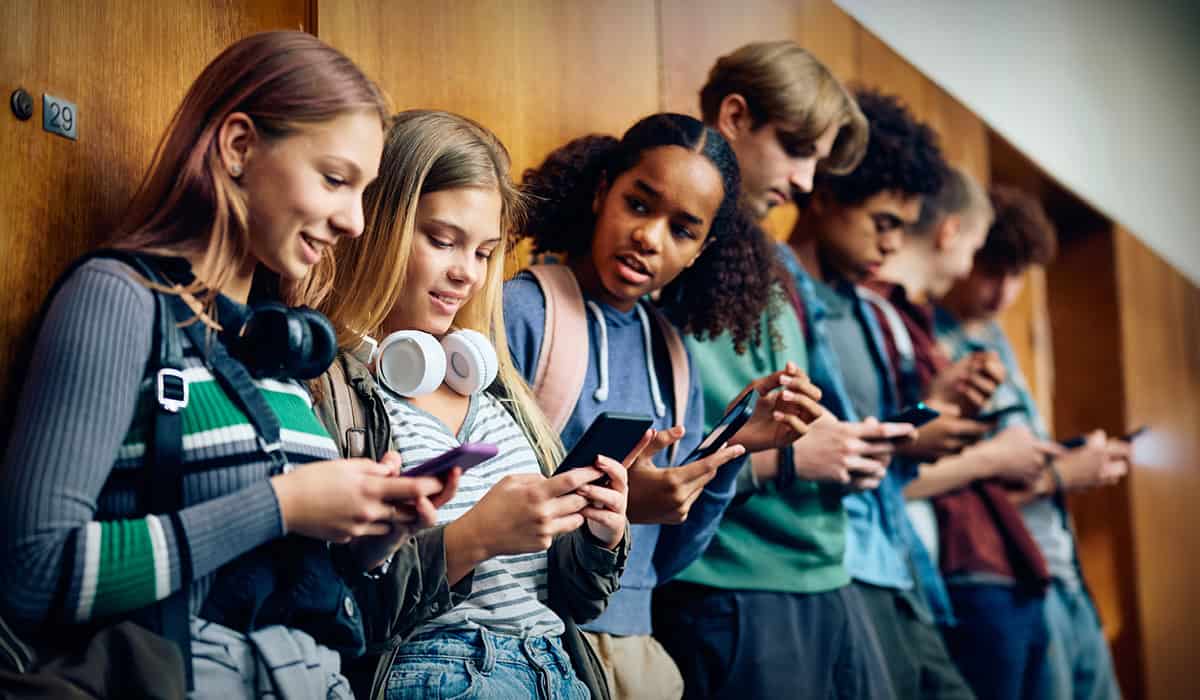

Smartphones, social media, and artificial intelligence are changing kids’ academic and social skills, according to an article in Education Week. To navigate these challenges, ask for input from those experiencing the changes.
Experts point to these factors transforming adolescent life in a digital world:
- The way social media feeds on adolescents’ need for social rewards makes it hard for kids to find a “pausing point,” says Eva Telzer, a psychology and neuroscience professor at the University of North Carolina at Chapel Hill. A continuous loop of engaging content inhibits moving to non-digital alternatives.
- Adolescents are more sensitive to the observations of others, Telzer says. Social media now puts kids in front of friends, family, friends of friends, and possibly even strangers, she says.
- For some teens going online might be the only space they feel comfortable exploring or expressing their identities and it could be lifesaving to have this safe space, says Linda Charmaraman, a senior research scientist for the Wellesley Centers for Women at Wellesley College in Massachusetts.
- Teens also experience algorithmic bias, such as selfie filters, says Brendesha Tynes, an education and psychology professor at the University of Southern California. She recommends developing “critical race digital and AI literacy” — being able to identify, critique, and cope with algorithmic bias in technologies and eventually create better technologies.
- Teens and young adults might be the most connected generation today — and also the loneliest generation, says Nikki Iyer, co-chair of the youth-led coalition Design It For Us and an undergraduate student at the University of California, Berkeley.
“There’s so many people around you all the time,” she says. “You’re on the train together. You’re in parks. You’re in cafes. But everyone is looking down, and that is a horrific way to grow up as the social creatures that we are.”
Creating a better online experience should involve young people, says Iyer.
“We are the ones who know what it’s like to exist and grow up digitally and to grow up in this social desert,” says Iyer.
Ask teens what they like and don’t like about digital technology and work with them on limiting the negatives, says Lisa Damour, a senior adviser to the Schubert Center for Child Studies at Case Western Reserve University in Ohio.
Hundreds of young people are working together with Design It For Us to create safer social media, Iyer says. This includes advocating for “age-appropriate design” and better regulation of specific features designed to keep people engaged, such as infinite scroll, autoplay, and targeted advertising.
“Our goal is to get as many young people as we can at the table so we can get policy that actually reflects what we want to see,” Iyer says.
Education Week